Why Powell Butte Listings Sit While the Rest of Crook County Sells
August 6, 2026
August 6, 2026
In December 2025 the median Crook County home sold in about 73 days, according to Redfin's county tracker. Powell Butte listings, drawn from the same MLS feed, carry an average listing age closer to 220 days across the Bend-adjacent brokerages tracking the ZIP, and one Rocket Homes snapshot put the figure at 337.
That gap is not a demand problem. It is a comp problem. And it is the single most useful thing a Powell Butte seller can understand before pricing a home, because the same mechanism that stretches the calendar is also what widens the gap between list price and sale price on the way to closing.
These are all Powell Butte 97753 closings pulled from public MLS records over the last twelve months. Look at what the days-on-market column does to the sale-to-list column.
| Address | Closed | List to sale | Days on market |
|---|---|---|---|
| 12512 SW Cornett Loop | Feb 2, 2026 | 3% under | 290 |
| 15360 SW Wooden Trestle Ln | Oct 17, 2025 | 14% under | 132 |
| 15826 SW Wooden Trestle Ct | Jan 5, 2026 | 10% under | 229 |
| 17174 SW Prospect Ct | Nov 20, 2025 | 18% under | 317 |
For contrast, 12110 SW Riggs Rd, a 1,478 square foot 1993 build, closed in April 2026 in three days at the list price. Small conventional home, ample comps within a few miles, quick sale. The pattern holds across the ZIP: the more unusual the property, the longer it sits, and the deeper the eventual price cut.
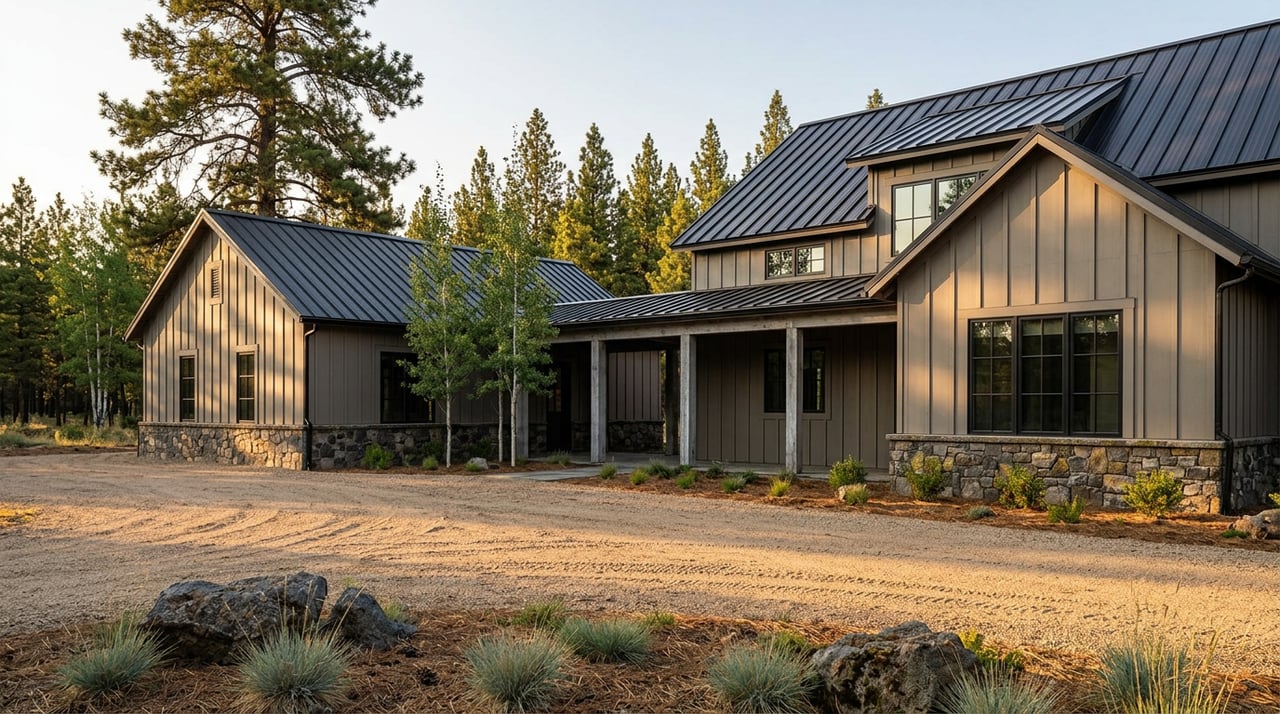
The Powell Butte inventory is not a normal residential inventory. The average Powell Butte home runs roughly 3,494 square feet against a Crook County average near 2,300, and the parcel underneath it is often five acres or more, sometimes with COID water rights, a detached shop, a horse setup, or all three. Custom builds on view lots dominate the product mix, and no two of them are the same.
When a lender-ordered appraiser gets that assignment, they open the MLS and try to find three closed sales inside the last year, inside a defensible radius, with similar acreage, similar outbuildings, and a similar view corridor. In most Powell Butte submarkets that search fails on the first pass. The appraiser then widens the radius, pulls in Terrebonne, Alfalfa, or the Prineville outskirts, and makes line-item adjustments for acreage, shop square footage, irrigation, and view. Every adjustment introduces a chance for the number to land under contract price.
That is the mechanism. Buyers who tour Powell Butte homes on Cornett Loop and Wooden Trestle understand what they are looking at. Their lender's appraiser, working from a spreadsheet, often does not. The listings that close within a few percent of ask are usually the ones where the seller made the appraiser's job easier before the sign went up.
Oregon requires certain disclosures at contract. Powell Butte sellers who want to compress DOM and defend the list price treat several of them as pre-listing work instead of contingency-period scrambling.
The disclosure form itself is ORS 105.464, the statutory Seller's Property Disclosure Statement. It answers on the seller's actual knowledge, which is exactly why assembling the well and septic paperwork before completing the form matters: knowledge you have documented is knowledge you can disclose specifically instead of marking "Unknown."
The reflex among Powell Butte sellers is to price against the neighbor's list, or against the mountain-view lot two roads over that got fifteen showings in a weekend. That is a demand-side read of a supply-side market.
A Powell Butte list price is not a marketing decision. It is a prediction about what an appraiser will bracket on a spreadsheet six weeks from now. The homes that close near ask are the ones where the seller priced the prediction, not the aspiration.
Working backward from that logic changes how a listing conversation goes. Instead of setting a number and hoping the buyer's lender finds it, the seller and agent build the number from the same comp set the appraiser will use, then add the documented premiums the appraiser can now defend on paper. Fewer surprises at contingency removal. Fewer price reductions at day 60 and day 120. A shorter calendar.
The four homes in the table above sat, on average, 242 days and closed 11% under the last list. A Powell Butte seller who reduces that gap by even half is capturing five and six figures on a $1.5M home. That is the return on the pre-listing work.
The pattern is not uniform across Powell Butte. Homesites inside Brasada Ranch have a slightly narrower comp set because product types repeat and the community shares utility infrastructure through Avion Water. Homes in Powell Butte Estates and West Powell Butte Estates, where five and ten acre parcels back to BLM, sit at the other end of the spectrum: fewer comps, more custom variation, longer DOM. Working farms and gentleman's ranches with COID acreage are the hardest of all to bracket, because they carry both a home value and an agricultural value and Oregon farm-use tax deferrals can transfer with the property.
Sellers in each of these submarkets are pricing into different friction. The pre-listing work is the same. The story the appraiser needs to be told is different.
Does a longer time on market mean I have to accept a lower price? Not automatically. It usually means the appraiser could not defend the original list with the comps available. Sellers who assemble the well, septic, water rights, and boundary paperwork before listing shorten that timeline because the appraiser has more to work with.
Do I have to test the well before I list? Oregon law requires the domestic well test at some point in the transaction and the results have to reach the buyer and OHA within 90 days of receipt, per the Oregon Property Seller Advisory. Doing it before listing, rather than during the buyer's inspection window, is a scheduling choice that avoids last-minute delays.
Will a pre-listing appraisal help? It can, especially on custom view homes without recent close comps. It gives the seller a defensible number to price against and often flags the exact line items where a lender's appraiser will struggle later. It is not a substitute for the lender's appraisal.
What about a home I built myself, with unpermitted work? ORS 105.464 asks specifically about additions, conversions, and remodels, and the form does not accept "Unknown" for the final material-defect question. Pull permits from Crook County before listing and disclose specifically. Unpermitted work is not disqualifying, but discovering it during a buyer's due diligence usually is.
Selling a Powell Butte property is a different job than selling a Prineville in-town home, and the days-on-market gap between the two is the market telling you so. If you are thinking about listing this year and want a pricing read that starts with the comp set an appraiser will actually use, Jessica Lay and the Lay Group work these submarkets every month. Get a Free Home Valuation and we will build the file with you.
Whether you're buying, selling, or investing in Central Oregon, The Lay Group is committed to providing expert guidance, local market knowledge, and personalized service every step of the way. Let's turn your real estate goals into reality.
The Lay Group
JESSICA LAY
(541) 228-8272
[email protected]
ADDRESS 150 SW DEER ST PRINEVILLE, OR 97754